When we are called out to a shingle roof leak, the shingles themselves are rarely the problem. The
water is almost always coming in where something passes through the roof: a plumbing vent, a bathroom
exhaust, a flue, a solar mount, an attic fan. Each one of those is a deliberate hole in an otherwise
continuous surface, and each one depends on a separate component to stay watertight.
Every penetration is a hole you have to seal
A typical Florida home has more of these than homeowners expect. Plumbing vent stacks, one or more
per bathroom group. Bathroom and kitchen exhaust terminations. A water heater or furnace flue. Ridge or
off-ridge vents. Attic fans. Satellite dish and solar mounts, and sometimes the remains of ones removed
years ago.
The sealing method differs by type. A round pipe normally gets a boot flashing: a metal or plastic
base plate that sits under and over the surrounding shingle courses, with a collar that grips the pipe.
Rectangular penetrations get a formed flashing with a similar lapping arrangement. In both cases the
principle is the one that governs all roofing, which is that the layers have to lap in the direction
water runs, and the seal must not depend on a bead of caulk.
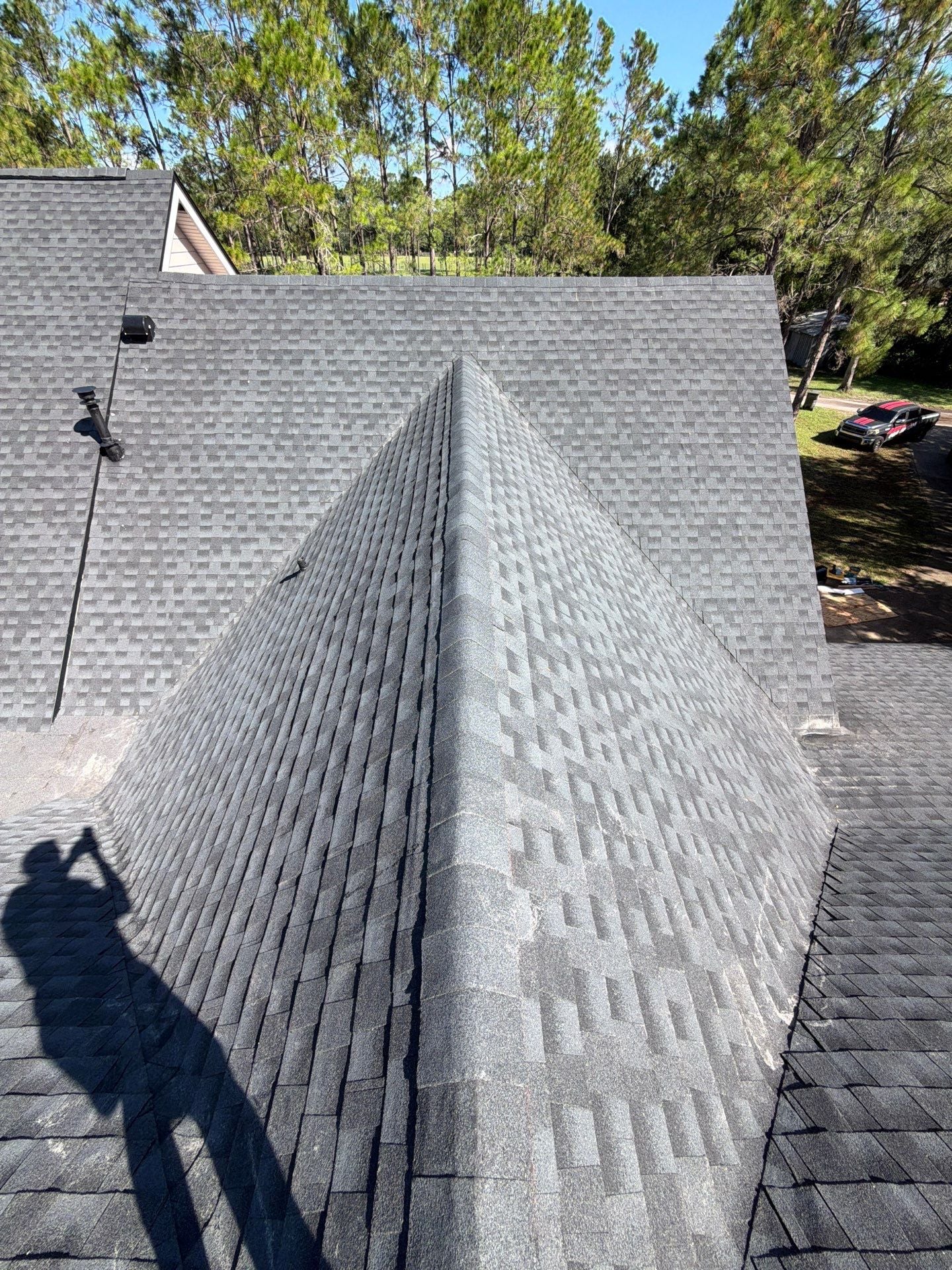
The vent in the photograph above is a standard plumbing stack with a boot flashing, integrated into
the shingle courses around it. That detail, done properly, will outlast several boots.
Why the rubber collar fails before the shingles do
Most boot flashings seal against the pipe with a rubber or synthetic gasket. That gasket is the
shortest-lived part of the entire roof, and the reason is ultraviolet light. It sits fully exposed, with
no shingle over it, taking direct Florida sun year-round. The rubber hardens, shrinks away from the
pipe, then cracks.
How quickly varies with product and exposure, but roofing-industry bulletins documenting these
failures have reported cracked and split gaskets appearing within four to eight years of installation,
across products from several different manufacturers. In a climate with our UV load, the lower end of
that range is realistic. The practical consequence is that boots usually need attention at least once,
sometimes twice, during the life of a shingle roof.
Two other failure modes are worth knowing. The metal base can corrode where it meets the pipe,
particularly if dissimilar metals are in contact. And on some roofs the pipe itself moves slightly with
temperature, working against the collar and widening the gap from below.
None of this means the boot was installed badly. It means it is a wearing part, like a gutter seal or
a sealant joint, and it should be on the list of things that get looked at rather than assumed.
The signs show up inside before they show up outside
A failing boot leaks a small volume of water, often only in wind-driven rain, and the water travels
before it appears. That makes the symptoms easy to misread.
- A brown ring or a faint stain on a ceiling, frequently near an interior wall rather than under the
vent itself. - A patch of ceiling paint that looks slightly different, or a hairline crack that reappears after
painting. - Staining on the underside of the roof deck in the attic, visible around a pipe.
- A musty smell in a closet or a bathroom with no obvious source.
- A cracked, split or visibly shrunken rubber collar, if you can see the vents from a window or an
adjacent elevation.
From the attic, the useful test is to look at the wood around the pipe rather than for dripping
water. Darkened or water-marked sheathing in a ring around the penetration tells you water has been
arriving there for some time, even if nothing is wet today.
Because the water tracks along framing, the wet spot on the ceiling is often several feet from the
entry point. That is why a leak that seems to have no source above it is very often a penetration a
little further up the slope.
Repair options, and when the boot is not the real problem
If the flashing base is sound and only the gasket has failed, the repair is straightforward. A
replacement collar or a retrofit boot that fits over the existing pipe can restore the seal without
disturbing the surrounding shingles. Done properly it is a modest job.
What we would discourage is the caulk-and-hope approach. Running sealant around a cracked collar can
stop a drip for a season, and we understand why it is tempting. But the sealant is exposed to the same
UV that destroyed the gasket, so it fails on the same timescale, and in the meantime water may continue
entering at a reduced rate while everyone believes the problem is solved.
The boot also may not be the real problem. Three things change the scope. If the flashing base is
corroded or was never correctly lapped into the shingle courses, the surrounding shingles have to come
up to put it right. If the deck beneath has softened, that has to be addressed before anything is
re-covered. And if the leak has been running for a long time, the damage may extend to insulation,
framing or drywall, which is a different conversation from a roofing repair.
Our guide to roof leak repair cost in Tampa sets out
how those factors change the number, and our note on
repair versus replacement is
relevant if the roof is already near the end of its service life.
Penetrations during a re-roof
A replacement is the moment to deal with all of this at once, and it is worth confirming in writing
what the scope includes.
New boots and flashings for every penetration should be part of the job, not an extra. Reusing an
existing boot on a new roof puts a component that may already be several years into its service life
under a covering expected to last decades. Penetrations that are no longer in use — an abandoned
satellite mount, a vent for an appliance that is gone — should be removed and the deck properly
patched and covered rather than flashed around. And it is worth asking whether any closely spaced vents
can be rationalised while the roof is open, because every penetration you do not have is one that
cannot leak.
If you are not sure what condition your penetrations are in, that is exactly the sort of thing a
proper inspection establishes; see what happens in a
roof inspection. For an active leak, our
residential roof repair services page explains
how we triage them.