The shingle roof cost has decoupled from general construction inflation since 2023. Labor shortages, material freight surcharges, and stricter Florida Building Code mandates have widened the gap between budget expectations and actual bids. This technical shift demands a planning framework rooted in verifiable line items, not per‑square averages.
A typical homeowner relying on national data expects a shingle roof replacement cost between $8,000 and $15,000. In the Tampa Bay market, that expectation misses reality by as much as 30%. The difference is not trivial. It represents the line between approving a project and delaying it for another year. Meanwhile the existing roof continues to age and insurance premiums climb.
Parallel to this development, roofing contractors have become less willing to absorb unexpected expenses. Fixed‑price bids now contain more exclusions for decking repairs, code upgrades, and disposal overages. Homeowners who do not understand the shingle roof cost per square model, or who ignore the specific drivers of local pricing, enter negotiations at a significant disadvantage. This guide dismantles those information asymmetries.
The False Precision of National Averages
National data sets report an average cost to replace roof shingles between $8,000 and $15,000 for a 2,200‑square‑foot home. That range is functionally useless for local decision‑making. Tampa Bay pricing routinely exceeds national medians by 12–18% due to wind‑mitigation requirements and a concentrated labor market.
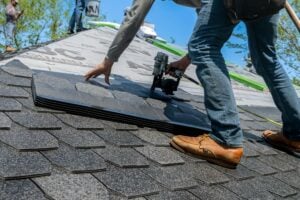
A more reliable baseline emerges from the shingle roof cost per square model. One square equals 100 square feet of roof surface. In Hillsborough and Pasco counties, installed per‑square rates for architectural asphalt shingles fall between $450 and $700. The cost of roof shingles alone (materials) represents roughly 35–40% of that figure. The balance covers labor, disposal, underlayment, flashing, permit fees, and contractor overhead.
How to Calculate Your Roof Replacement Budget
Based on this fact, there are four discontinuous inputs needed to figure out an accurate budget:
Surface Area of Roof in Squares:Get a satellite reading or a physical on-deck determination. Multiply total squares by the high end of the local per‑square range ($650–$700).
Tear‑off Layers: Each existing layer adds $50–$150 per square for removal and disposal. So, two layers double that cost.
Decking Contingency: Industry data indicates a 25–30% probability of finding soft or rotted plywood during tear‑off. Budget an additional $1,000–$1,500 for a typical 20‑square roof.
Permit and Inspection Fees: These range from $200 to $500 and are non‑negotiable for code‑compliant work.
Fiscal Ramifications: This becomes evident when these components are summed. A 20‑square roof at $650 per square yields a base of $13,000. Adding a single tear‑off layer ($1,500), decking contingency ($1,200), and permits ($350) pushes the shingle roof replacement cost to $16,050. That figure is 34% higher than the national average’s midpoint.
Three Factors That Override Per‑Square Calculations
Standard online guides emphasize roof slope and complexity. Those variables matter, but three less‑discussed factors exert disproportionate influence on final invoices.
Wind Rating and Impact Resistance
Florida Building Code requires shingles rated for 130‑mph or higher wind speeds in most of the Tampa Bay region. Basic 3‑tab shingles often carry lower ratings and may fail inspection. Architectural shingles with Class 3 or 4 impact resistance cost 20–30% more than entry‑level products. The cost of their roof shingles is higher but is compensated by the possible insurance premium credits and denied-claim avoidance.
Underlayment Specifications
Standard felt underlayment (15-, or 30-, pound) is the minimum code, but has low tear resistance. Synthetic underlayment is priced at a premium of $0.20-0.50/sf, but offers better grip, UV protection, and walkability on-site. Many premium shingle warranties require synthetic underlayment as a condition of coverage. Substituting felt voids those warranties.
Contractor Licensing and Insurance Overhead
Licensed Florida roofing contractors carry general liability, workers’ compensation, and surety bonds. Unlicensed operators do not. The cost to replace roof shingles from a licensed firm runs 15–25% higher. That premium buys legal recourse, manufacturer warranty validation, and inspection passage. The alternative risks stop‑work orders, fines, and a roof that cannot be sold with the property.
Longevity as a Budget Multiplier
Contrary to standard practice, the lowest upfront shingle roof cost rarely represents the lowest total ownership expense. A 3‑tab shingle roof lasting 15 years costs approximately $533 annually on a $8,000 installation. An architectural shingle roof lasting 25 years costs $440 annually on an $11,000 installation. The premium roof saves $93 per year and eliminates the disruption of a second replacement cycle.
In line with this, the quality of ventilation has a direct influence on lifespan. Higher than 140°F attic temperatures weaken shingle adhesives and hasten the loss of granules. Continuous soffit intake when used with ridge vents alleviates thermal stress. The incremental cost of adequate ventilation (500-1000) will usually pay back in 5 years with long life of shingles and less cooling requirements.
Insurance And The Timing Trap
Many Florida homeowners discover too late that their insurance carrier will not renew a policy on a roof older than 15 years. Those that do renew often switch from Replacement Cost Value (RCV) to Actual Cash Value (ACV). ACV payouts for an 18‑year‑old roof may cover only 20–30% of replacement costs after depreciation.
This is a dynamic which compels a strategy decision. Installing a new roof at 14th year, when insurance pressure is not as great, will enable competitive bids and eliminate emergency pricing. Delaying until 18th year or following a storm event condenses timeframes and gives contractors the ability to charge premiums due to fast mobilization. Replacement cost of roof shingles under emergency conditions can be more than 30-40 above the standard costs.
Final Planning
Understanding shingle roof cost is less about chasing national averages and more about knowing what drives pricing in your market, from code upgrades to tear-off layers and material grade. Shingle roof cost only makes sense when you look beyond rough online estimates and focus on what your roof actually needs. The cost of roof shingles is shaped by all the upgrades. Even the shingle roof cost per square can shift once hidden damage shows up. That is why the average cost to replace roof shingles and the full cost to replace roof shingles should be reviewed carefully before making a decision. Magnum Roofing and Restoration helps homeowners plan for real shingle roof replacement cost, not guesswork.
Frequently Asked Questions
Q. What is the average shingle roof cost in 2026?
The average shingle roof cost will lie somewhere between $14,000–$19,000 for a typical 2,200‑square‑foot Florida home with architectural shingles, including tear‑off, permits, and synthetic underlayment.
Q. How is the shingle roof cost per square calculated?
To calculate the shingle roof cost per square you need to divide the total installed price by the number of 100‑square‑foot units of roof surface. This will result in the per‑square figure which includes materials, labor, disposal, and overhead.
Q. What factors affect the overall shingle roof replacement cost?
There are several factors affecting the overall shingle roof replacement cost. However, wind rating requirements, underlayment type, number of existing layers, decking condition, permit fees, contractor licensing, and ventilation upgrades are the popular ones that play the major role in the whole shingle roof cost.
Q. How long do roof shingles last after installation?
The lifespan of roof shingles after installation depends largely on the type. The Architectural shingles last for around 25–30 years in Florida’s climate. On the other hand, the 3‑tab shingles have a life of around 15–18 years with proper ventilation and maintenance.
Q. Can insurance cover shingle roof replacement costs?
Yes, for damage from covered perils (wind, hail, and falling objects), but not for age-related wear. ACV policies on older roofs provide significantly reduced payouts.